
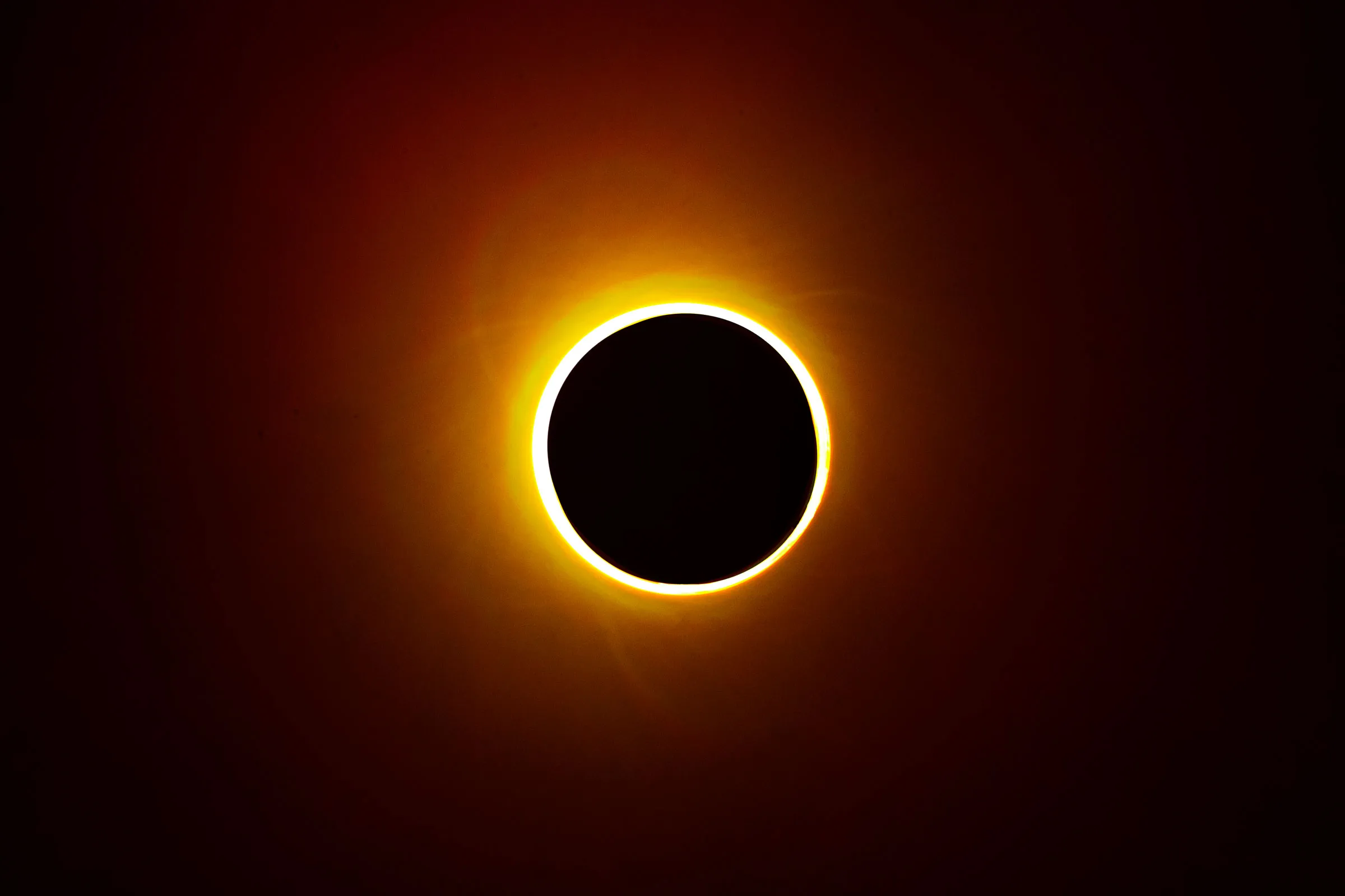
The total solar eclipse of 2024 is set to occur on April 8. Although solar eclipses generally happen at intervals of about six years, this time the celestial event will be significantly different from previous ones in many ways. Due to a special position of the Moon, this eclipse will last for an unusually long duration.
Washington: For those who observe celestial events, every eclipse is an exciting experience, but the solar eclipse of April 2024 may even excite those who are not particularly interested in astronomy. A total solar eclipse is going to occur on April 8, which has become extremely significant for astronomers due to its unique characteristics. According to NASA, this eclipse could be even more fascinating due to differences in its path, timing, and scientific research opportunities. Scientists say that the 2024 total solar eclipse will be the longest in the past 50 years.
What is a total solar eclipse?
A total solar eclipse occurs when the Moon comes directly between the Earth and the Sun. As a result, sunlight is blocked from reaching the Earth, and a shadow falls on part of the Earth's surface. During a total solar eclipse, the Moon completely covers the solar disk, causing temporary darkness during the day. The last time such an event occurred was in 2017, but the 2024 eclipse is expected to be quite different from previous ones.
Why will this eclipse last longer?
Scientists have explained that the 2024 total solar eclipse will be the longest in the past half-century. Just a day before the eclipse, the Moon will be at its closest point to Earth. On April 8, during the eclipse, the Moon will be only about 3,60,000 kilometers away from Earth. Because of this closer distance, the Moon will appear slightly larger than usual, allowing it to block the Sun for a longer time and extending the duration of darkness on Earth. Meanwhile, Earth and the Moon will maintain an average distance of about 15 million kilometers from the Sun during the eclipse. Due to this alignment, the Sun will remain hidden for up to 7.5 minutes, which is significantly longer than usual. The last time such a long duration of darkness was observed was in 1973, which cast its shadow over parts of the African continent.
Such an eclipse will not be seen again until 2150
Interestingly, a similar eclipse will not be visible again until 2150 over the Pacific Ocean region. This total solar eclipse will be visible in parts of Mexico, the United States, and Canada. In states like Montana, North Dakota, and South Dakota, it can be clearly seen with the naked eye. However, experts recommend using special eclipse glasses for safe viewing, except during brief moments.
Source: Navbharattimes