
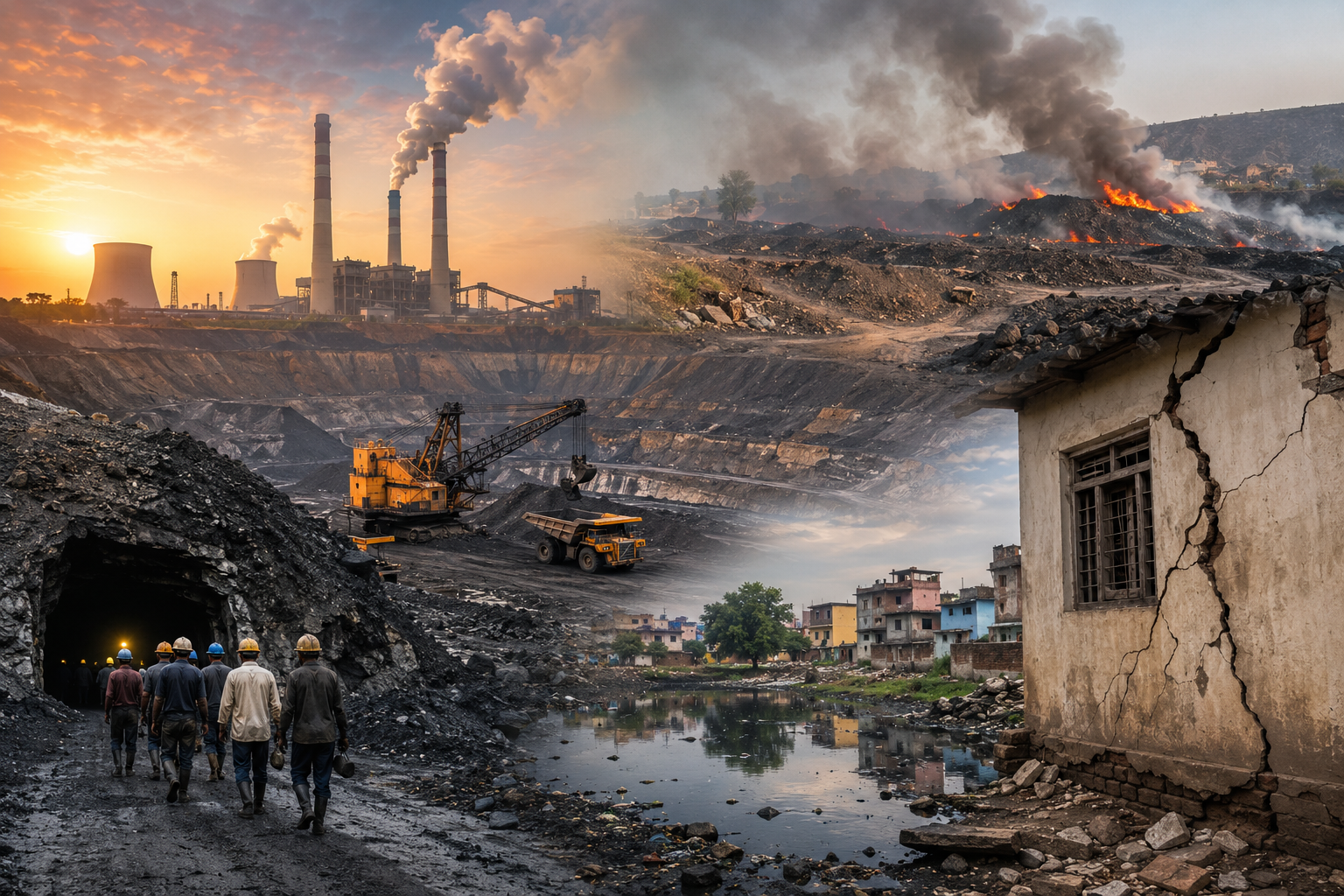
Many parts of the region have been battling underground coal fires for decades. Residents in some mining areas face polluted air, damaged roads, cracked buildings, and concerns over land subsidence. While coal has brought employment and economic prosperity, it has also created environmental and health challenges that cannot be ignored.
So, is coal a blessing or a burden for Dhanbad?
The answer is more complex than a simple yes or no.
Why Is Dhanbad Called the Coal Capital of India?
Located in Jharkhand, Dhanbad is home to one of India's richest coal belts. The district is particularly famous for its high-quality coking coal, an essential raw material used in steel production.
Large-scale mining has been carried out here for over 100 years, making the region one of the country's most important industrial hubs.
Today, coal from Dhanbad supports:
- Thermal power plants
- Steel manufacturing
- Cement industries
- Railways
- Heavy engineering
- Chemical industries
Millions of people across India benefit indirectly from the energy and industrial products made possible by coal mined in this region.
How Coal Mining Changed Dhanbad
Before mining expanded, Dhanbad was a relatively small town. As coal production increased, the city rapidly developed into an industrial center.
Mining created:
- Employment opportunities
- Better road and railway connectivity
- Business growth
- Housing colonies
- Educational institutions
- Healthcare facilities
- Commercial markets
Thousands of workers migrated from different parts of India, contributing to the city's diverse culture and economy.
Economic Benefits of Coal Mining
Employment for Thousands
Coal mining remains one of the largest sources of employment in the region.
Jobs are created not only inside mines but also in:
- Transportation
- Equipment maintenance
- Engineering
- Construction
- Retail businesses
- Restaurants
- Hotels
- Logistics
Many families have depended on the mining industry for generations.
Fueling India's Industries
Coal from Dhanbad powers industries that manufacture products used every day.
These include:
- Electricity generation
- Steel production
- Cement manufacturing
- Industrial machinery
- Railway operations
Without a stable coal supply, many sectors of India's economy would face major challenges.
Boosting Local Business
Mining activity supports thousands of small businesses.
Local workshops, grocery stores, hotels, vehicle repair shops, equipment suppliers, and transportation companies all benefit from the mining economy.
This creates a ripple effect that supports livelihoods far beyond the mines themselves.
The Other Side of the Story
While coal has helped build Dhanbad's economy, it has also brought several long-term challenges.
Underground Coal Fires: A Problem That Refuses to End
One of Dhanbad's most well-known environmental issues is the presence of underground coal fires, particularly in parts of the Jharia coalfield.
These fires have continued burning beneath the surface for decades.
As coal burns underground, it generates intense heat and releases gases into the atmosphere.
The consequences include:
- Continuous smoke emissions
- Rising ground temperatures
- Toxic gases
- Unsafe living conditions
- Land instability
In some areas, people have had to relocate because the ground became unsafe for habitation.
Air Pollution: A Daily Challenge
Coal mining produces significant amounts of dust.
Major sources include:
- Drilling
- Blasting
- Coal loading
- Transportation trucks
- Open coal storage
- Crushing plants
Fine dust particles can remain suspended in the air for long periods.
Residents living close to mining zones often report:
- Persistent coughing
- Eye irritation
- Breathing difficulties
- Dust accumulation inside homes
Improving dust control remains one of the biggest environmental priorities.
Water Pollution
Mining operations can affect nearby water bodies if wastewater is not properly managed.
Potential concerns include:
- Sediment entering rivers
- Contaminated runoff
- Reduced groundwater quality
- Changes in local drainage patterns
Modern treatment systems have improved water management, but continuous monitoring remains essential.
When the Ground Begins to Sink
One of the less visible effects of underground mining is land subsidence.
As coal is extracted, empty spaces are left underground. Over time, these spaces may collapse, causing the surface to sink.
Possible impacts include:
- Cracked houses
- Damaged roads
- Broken pipelines
- Uneven ground
- Structural damage
Construction in some areas requires detailed geological studies before work begins.
Construction Challenges in Mining Areas
Building homes, roads, schools, and commercial projects near old mining zones can be difficult.
Engineers often need to conduct:
- Soil investigations
- Geological surveys
- Stability assessments
- Ground monitoring
In high-risk areas, additional foundation work may be required to ensure long-term safety.
Environmental Damage
Mining changes the natural landscape.
Common environmental impacts include:
- Deforestation
- Loss of vegetation
- Soil erosion
- Habitat destruction
- Increased greenhouse gas emissions
- Reduced biodiversity
Reclaiming mined land through plantation and restoration programs is becoming increasingly important.
Health Concerns for Nearby Communities
People living near mining areas may face higher exposure to dust and pollutants.
Long-term exposure may contribute to:
- Asthma
- Chronic respiratory diseases
- Allergies
- Eye irritation
- Reduced air quality
Improving healthcare facilities and pollution control measures can help reduce these risks.
What Is Being Done to Improve the Situation?
Mining companies and government agencies have introduced several measures to reduce environmental impacts.
These include:
- Dust suppression systems
- Tree plantation drives
- Mine fire monitoring
- Scientific mine closure plans
- Rehabilitation of affected families
- Improved worker safety equipment
- Water treatment facilities
Although challenges remain, these initiatives aim to make mining safer and more sustainable.
Can Coal Mining Become More Sustainable?
Experts believe the future of coal mining will depend on balancing industrial needs with environmental protection.
Possible improvements include:
- Cleaner mining technologies
- Better emission control
- Faster land restoration
- Renewable energy integration
- Advanced fire detection systems
- Sustainable rehabilitation programs
These efforts could reduce environmental impacts while maintaining economic benefits.
The Road Ahead for Dhanbad
As India gradually increases its renewable energy capacity, coal is still expected to remain an important energy source for years to come.
For Dhanbad, the challenge is not simply producing more coal—it is producing coal responsibly.
Future development will depend on protecting the environment, ensuring worker safety, improving living conditions for nearby communities, and restoring damaged landscapes wherever possible.
Frequently Asked Questions
Why is Dhanbad called the Coal Capital of India?
Because it contains some of India's largest and richest coal reserves and has been a major coal-producing region for over a century.
Why are underground coal fires a concern?
They release harmful gases, weaken the ground, create land subsidence, and can make nearby areas unsafe for residents.
Does coal mining affect construction?
Yes. In some mining zones, underground voids and unstable soil require detailed engineering studies before new buildings or infrastructure can be constructed.
Is coal mining beneficial?
Yes. It provides employment, supports industries, generates government revenue, and contributes significantly to India's economy. However, environmental and health impacts must also be managed responsibly.
Final Thoughts
Dhanbad's story is one of both progress and responsibility. Coal has powered industries, created livelihoods, and helped build modern India. At the same time, it has left behind environmental scars that require long-term solutions.
The future of the Coal Capital of India depends on finding the right balance between economic development and environmental sustainability. Cleaner technologies, better planning, stronger safety measures, and continuous restoration efforts can help ensure that Dhanbad remains an industrial powerhouse while becoming a healthier and safer place to live for future generations.




Comments