
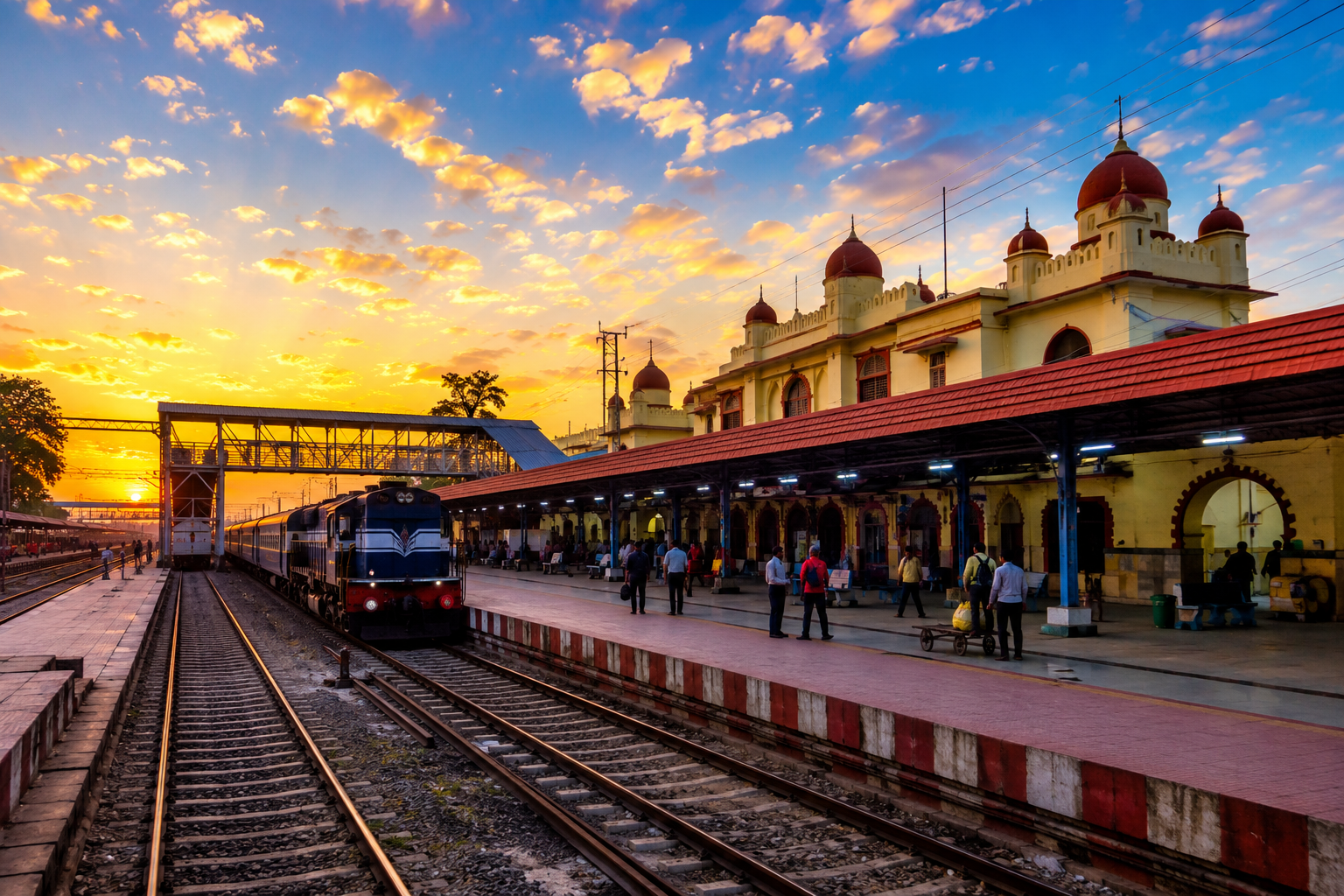
Before the Railways Came
Long before railway tracks reached Dhanbad, the region was covered with forests and scattered villages.
Although the area was rich in coal reserves, transporting coal was a major challenge.
Coal extracted from the mines had to be moved using bullock carts and horse-drawn wagons. This made transportation slow, expensive, and inefficient.
Without an efficient transport system, the enormous coal wealth of Jharia and Dhanbad could never be fully utilized.
The arrival of the railway changed everything.
The Birth of Dhanbad Railway Station
The railway network reached the region in the late nineteenth century as the British expanded India's railway system to support industrial growth.
The construction of railway lines through the coalfields connected Dhanbad with Kolkata, Asansol, Gaya, Delhi, and other important cities.
As coal production increased, a major railway station became essential.
Thus, Dhanbad Junction gradually developed into one of the most important railway hubs on the Grand Chord route of the Howrah–Delhi railway line.
Its strategic location made it a crucial link between eastern India's coalfields and the country's growing industries.
Fueling India's Industrial Revolution
Coal was the lifeblood of the Industrial Revolution in India.
Every day, thousands of tonnes of coal left the mines of Jharia and surrounding areas through Dhanbad Railway Station.
These trains supplied fuel to:
- Steel plants
- Thermal power stations
- Railway locomotives
- Cement factories
- Heavy industries
- Manufacturing units
Without Dhanbad Junction, transporting such enormous quantities of coal across the country would have been nearly impossible.
In many ways, the railway station became the heartbeat of India's industrial economy.
More Than a Passenger Station
Although millions of travelers pass through Dhanbad every year, the station's importance extends far beyond passenger services.
It has long served as one of India's busiest freight railway centers.
Massive coal rakes depart daily from nearby railway yards, carrying fuel to every corner of the country.
The station supports:
- Coal transportation
- Freight operations
- Passenger services
- Railway maintenance
- Crew management
- Logistics and supply chains
Its operations continue around the clock, making it one of the busiest railway junctions in eastern India.
A City That Grew Around the Tracks
As railway connectivity improved, Dhanbad expanded rapidly.
Railway colonies, markets, hotels, restaurants, educational institutions, and residential neighborhoods developed around the station.
Thousands of railway employees and their families made Dhanbad their home.
Businesses flourished because goods and people could now travel easily between Dhanbad and the rest of India.
The station became one of the primary reasons behind the city's urban growth.
The Grand Chord Connection
One of Dhanbad Junction's greatest advantages is its location on the famous Grand Chord Railway Line, one of India's busiest railway corridors.
This route connects:
- Kolkata
- Dhanbad
- Gaya
- Prayagraj
- Kanpur
- New Delhi
Because of this strategic position, nearly every major train traveling between eastern and northern India passes through Dhanbad.
The station serves passengers from Jharkhand, Bihar, West Bengal, Uttar Pradesh, Delhi, and many other states.
The Electric Railway Hub
Dhanbad has always been closely associated with railway innovation.
The division became one of India's most important centers for electric railway operations.
Modern electric locomotives replaced steam engines, improving efficiency and reducing travel time.
Today, powerful electric engines haul both passenger trains and some of the country's longest freight trains through Dhanbad.
This modernization has strengthened the city's role in India's railway network.
A Lifeline for Coal and Commerce
Every day, countless freight trains loaded with coal depart from Dhanbad toward power plants, steel industries, and manufacturing centers across India.
The station's railway yards operate continuously to manage this enormous movement of goods.
The economy of eastern India depends heavily on this uninterrupted rail connectivity.
For decades, Dhanbad Railway Station has quietly ensured that industries receive the fuel they need to keep running.
More Than Just Tracks and Platforms
For many residents, Dhanbad Junction is filled with memories.
It is where students leave home to pursue higher education.
Where miners return after long shifts.
Where families reunite during festivals.
Where soldiers depart to serve the nation.
Where countless journeys begin.
Every platform has witnessed emotional farewells, joyful reunions, and stories of hope spanning generations.
A Modern Railway Station
Over the years, Dhanbad Junction has undergone significant modernization.
Today, passengers enjoy facilities such as:
- Escalators and lifts
- Digital information boards
- Modern waiting halls
- Food courts
- Free Wi-Fi
- CCTV surveillance
- Clean platforms
- Improved accessibility
- Online reservation services
These upgrades have made travel safer and more convenient while preserving the station's historic importance.
Challenges of a Growing Hub
With increasing passenger numbers and freight traffic, Dhanbad Junction faces several modern challenges.
Managing congestion, maintaining infrastructure, improving cleanliness, and expanding passenger amenities remain ongoing priorities.
Indian Railways continues to invest in modernization projects to ensure the station meets the demands of future generations.
The Legacy of Dhanbad Railway Station
For more than a century, Dhanbad Junction has done far more than connect cities.
It has connected industries with resources.
Families with loved ones.
Students with opportunities.
Workers with employment.
And the Coal Capital with the rest of India.
Few railway stations have played such a significant role in shaping the economy and identity of an entire region.
Conclusion
The story of Dhanbad Railway Station is not simply the story of trains and platforms.
It is the story of a city that grew alongside the railway tracks, powered India's industries, and connected millions of lives.
From the steam locomotives of the British era to today's high-powered electric trains, Dhanbad Junction has remained at the heart of the city's progress.
As new railway technologies emerge and India's transportation network continues to evolve, Dhanbad Railway Station will remain what it has always been—a symbol of movement, opportunity, and the enduring spirit of the Coal Capital of India.
Did You Know?
- Dhanbad Junction is one of the busiest railway stations in Jharkhand and serves as the headquarters of the Dhanbad Railway Division under the East Central Railway.
- It is located on the historic Howrah–Delhi Grand Chord route, one of India's busiest railway corridors.
- The station is a major hub for both passenger services and coal freight transportation, supporting industries across the country.
- Thousands of passengers and numerous freight trains pass through Dhanbad Junction every day.
- The railway station has played a vital role in the growth of Dhanbad as the Coal Capital of India.



Comments