
The River That Once Brought Destruction
Before the construction of Maithon Dam, the Damodar River was feared rather than celebrated.
During the monsoon, the river frequently overflowed, causing catastrophic floods across present-day Jharkhand and West Bengal. Entire villages were submerged, crops were destroyed, railway lines were washed away, and industries suffered enormous losses.
Because of these repeated disasters, the Damodar River earned the grim nickname:
"The Sorrow of Bengal."
After India's independence, the government recognized that controlling the river was essential for the region's economic development.
The Birth of the Damodar Valley Corporation
Inspired by the successful Tennessee Valley Authority (TVA) in the United States, the Government of India established the Damodar Valley Corporation (DVC) in 1948.
Its mission was ambitious:
- Control floods
- Generate electricity
- Supply irrigation water
- Promote industrial development
- Improve navigation
- Support regional economic growth
To achieve this vision, a series of dams were planned across the Damodar Valley.
Among them, Maithon Dam became one of the most important.
Why Was Maithon Chosen?
The location offered several advantages.
The Barakar River, the largest tributary of the Damodar River, flowed through a naturally suitable valley that could store enormous quantities of water.
The surrounding terrain provided ideal conditions for constructing a large reservoir capable of controlling floods while generating hydroelectric power.
Construction began in the early 1950s, bringing together thousands of engineers, workers, and technicians.
It was one of the largest infrastructure projects undertaken in eastern India during that era.
A Modern Engineering Marvel
Maithon Dam was officially inaugurated in 1957.
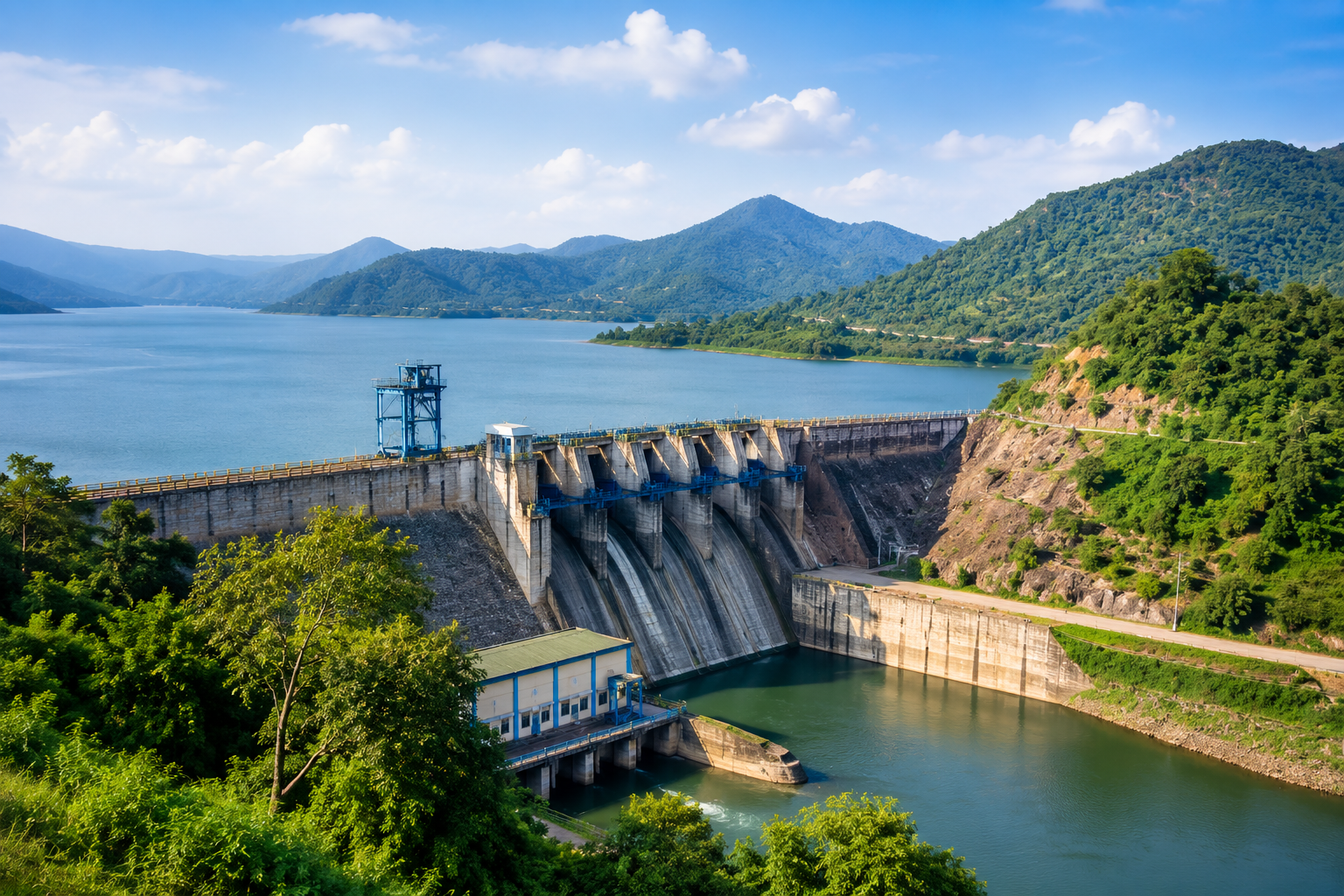
Built primarily across the Barakar River, the dam created one of eastern India's largest reservoirs.
The project included:
- A massive concrete and earth-fill dam
- Large spillway gates for flood control
- A hydroelectric power station
- Water storage for irrigation
- Reservoir management systems
One of its most remarkable features was India's first underground hydroelectric power station, built beneath the hills near the dam.
This innovative design protected vital equipment while making efficient use of the surrounding terrain.
At the time, it was considered one of India's most advanced engineering accomplishments.
Protecting Millions from Floods
The primary purpose of Maithon Dam was flood control.
Every monsoon, the reservoir captures enormous volumes of water that would otherwise rush downstream into the Damodar River basin.
By regulating river flow, the dam significantly reduces the risk of flooding across several districts of Jharkhand and West Bengal.
Communities that once lived in constant fear of seasonal floods now enjoy far greater security because of the reservoir's ability to manage excess water.
Powering Eastern India
Beyond flood control, Maithon plays a vital role in electricity generation.
Its hydroelectric power station converts the force of flowing water into clean, renewable energy.
This electricity supports households, industries, railways, and commercial establishments throughout eastern India.
Combined with DVC's thermal power stations, Maithon contributes significantly to the region's energy security.
Supporting Agriculture and Industry
The stored water from Maithon Dam is also essential for irrigation.
Farmers across the Damodar Valley depend on regulated water supplies to cultivate crops throughout the year.
Industries, especially the steel, coal, and power sectors, rely on the reservoir for a dependable water source.
Without projects like Maithon, the rapid industrial growth of Dhanbad, Bokaro, Asansol, and Durgapur would have been far more difficult.
A Paradise for Nature Lovers
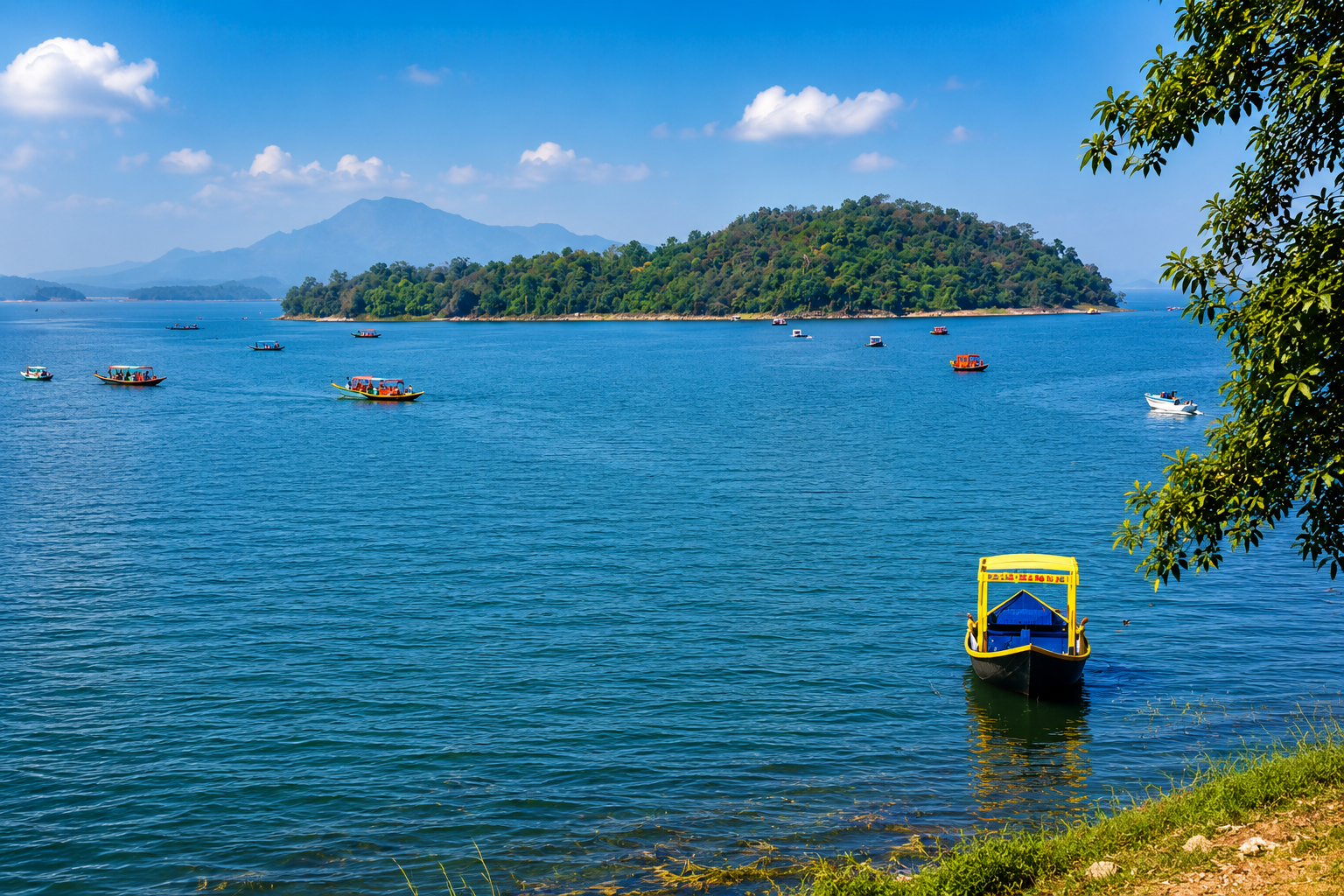
While Maithon was built for engineering purposes, nature transformed it into one of Jharkhand's most beautiful destinations.
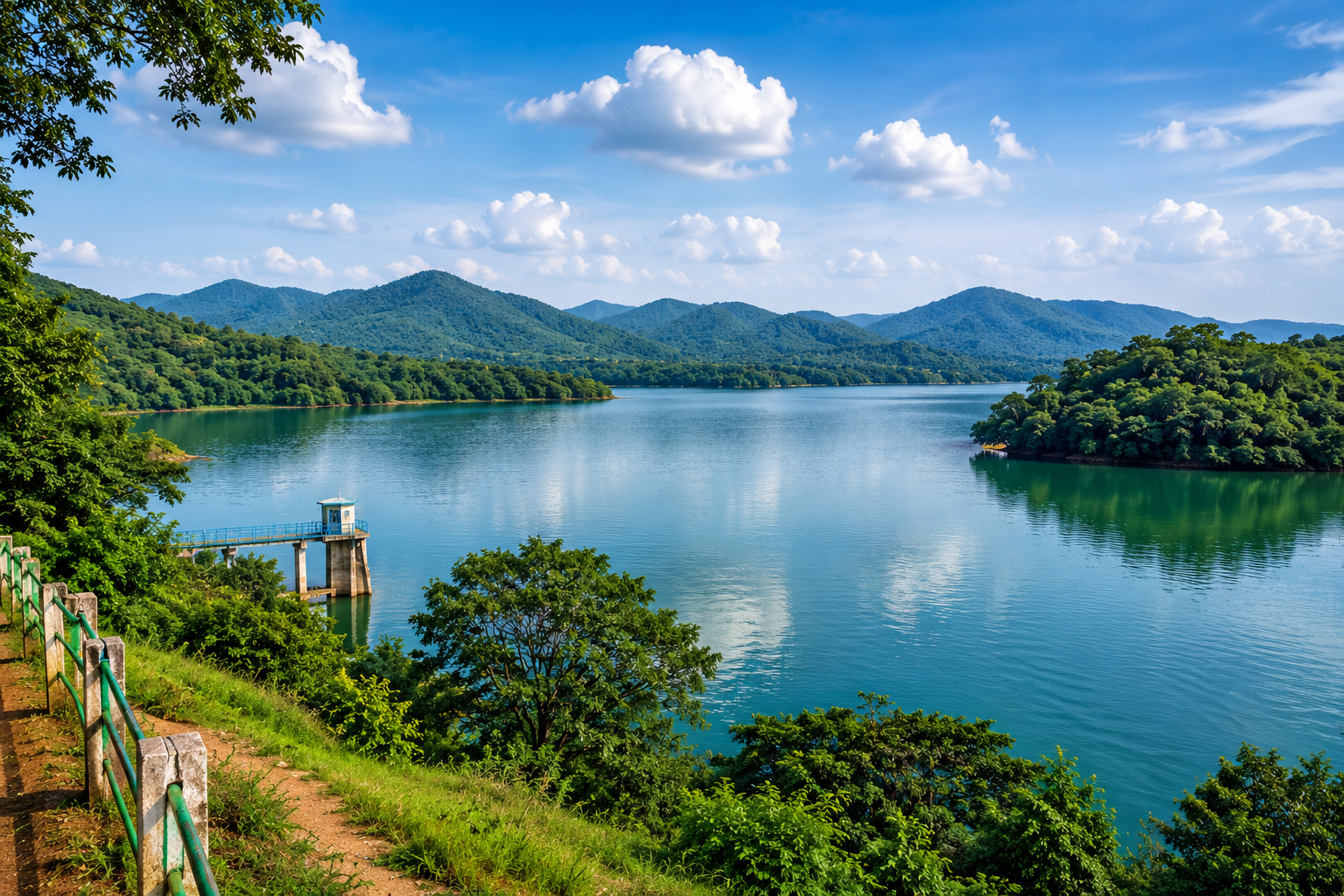
The vast reservoir stretches across rolling hills, creating breathtaking landscapes that change with every season.
Visitors enjoy:
- Boating on the reservoir
- Sunrise and sunset views
- Scenic viewpoints
- Green hills surrounding the lake
- Bird watching during winter
- Family picnics
- Photography
The calm waters and fresh air make Maithon one of the most peaceful escapes from the busy cities of Dhanbad and Asansol.
The Famous Kalyaneshwari Temple
Just a few kilometers from Maithon Dam stands the ancient Kalyaneshwari Temple, one of the region's most revered Hindu shrines.
Dedicated to Goddess Kalyaneshwari, the temple attracts thousands of devotees every year, especially during Navratri and other festivals.
Many tourists combine their visit to the dam with a pilgrimage to this historic temple.
Together, they make Maithon a destination that blends spirituality, history, and natural beauty.
A Weekend Escape for Dhanbad
For generations, families from Dhanbad have chosen Maithon as their favorite picnic destination.
School excursions, college trips, family gatherings, and holiday outings have made the dam part of countless childhood memories.
During winter weekends, the gardens and reservoir come alive with visitors enjoying food, boating, music, and breathtaking views.
For many people, Maithon is not just a tourist spot—it is a tradition.
Challenges in the Modern Era
Like many reservoirs around the world, Maithon faces new challenges.
Climate change, changing rainfall patterns, increasing tourism, pollution, and environmental conservation require careful management.
The Damodar Valley Corporation continues to modernize dam operations, improve safety systems, and protect the reservoir for future generations.
Balancing development with environmental sustainability remains one of the dam's greatest responsibilities.
The Legacy of Maithon Dam
More than sixty years after its inauguration, Maithon Dam continues to fulfill the vision with which it was built.
It has transformed a flood-prone region into one capable of supporting agriculture, industries, cities, and millions of people.
It stands as a reminder that thoughtful engineering can improve lives while living in harmony with nature.
Conclusion
The story of Maithon Dam is not simply about concrete walls holding back water.
It is the story of how independent India turned one of its most destructive rivers into a source of life, prosperity, and progress.
From preventing floods and generating clean energy to becoming one of eastern India's most beloved tourist destinations, Maithon has touched the lives of countless people.
Today, whether you visit for its breathtaking sunsets, peaceful reservoir, historic temple, or remarkable engineering, one thing becomes clear—Maithon Dam is far more than a dam.
It is one of the greatest success stories of the Damodar Valley and a proud symbol of Jharkhand's development.
Did You Know?
- Maithon Dam was inaugurated in 1957 as part of the Damodar Valley Corporation (DVC) project.
- It is built across the Barakar River, the largest tributary of the Damodar River.
- The project houses India's first underground hydroelectric power station.
- The dam plays a vital role in flood control, hydroelectric power generation, irrigation, and industrial water supply.
- Located about 50 km from Dhanbad, Maithon is one of the most popular tourist and picnic destinations in Jharkhand.

Comments