
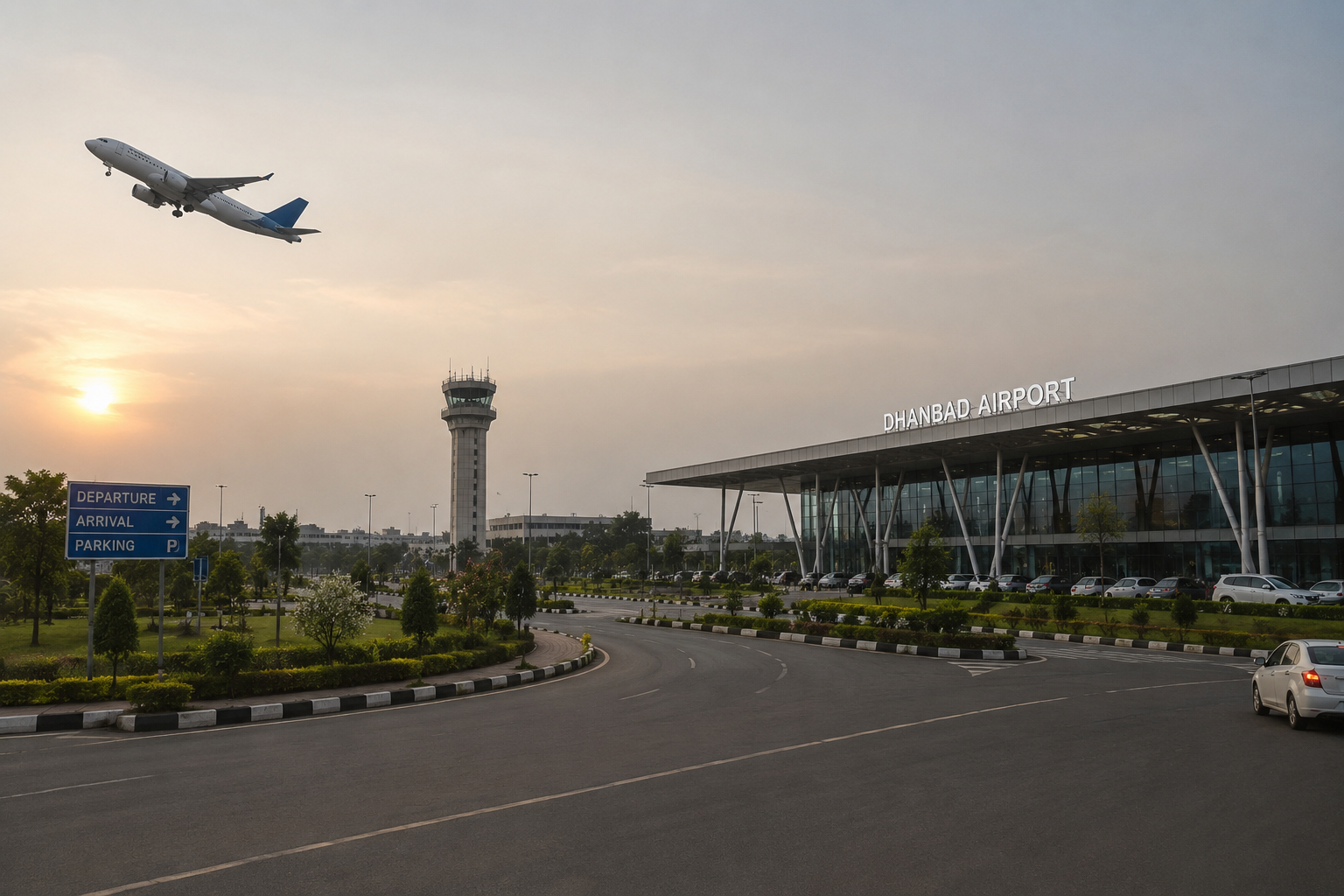
A Major Industrial Hub Without an Airport
Dhanbad is one of the most important industrial centers in eastern India. The city contributes significantly to the coal, energy, and mining sectors and serves as a key economic engine for Jharkhand. Thousands of professionals, entrepreneurs, students, and government officials travel to and from the city every year.
However, travelers must currently depend on airports in Ranchi, Deoghar, Kolkata, or other nearby cities, often spending several additional hours on road or rail journeys before they can board a flight. This lack of direct air connectivity creates inconvenience and limits the city's potential.
Growing Population, Growing Demand
The Dhanbad region, along with neighboring districts such as Bokaro, Giridih, and Jamtara, is home to millions of people. The city also serves as a commercial center for nearby areas of West Bengal.
As air travel becomes increasingly accessible across India, many smaller cities have already gained airport infrastructure and regular flight services. In comparison, Dhanbad's absence from the country's aviation network raises important questions about regional development and connectivity.
Boosting Business and Investment Opportunities
Modern transportation infrastructure plays a critical role in attracting investment and supporting economic growth. A new airport in Dhanbad would make the city more accessible to investors, corporate leaders, and entrepreneurs from across the country.
Improved air connectivity could encourage new industries, business ventures, and commercial projects, helping create jobs and strengthen the local economy. Companies looking to establish operations in eastern India would view Dhanbad as a more attractive destination if direct air travel were available.
Supporting Education and Healthcare
Dhanbad is home to the prestigious Indian Institute of Technology (ISM) Dhanbad, which attracts students, researchers, and faculty members from across India and abroad.
A local airport would greatly benefit the academic community by reducing travel time and improving accessibility. In addition, better air connectivity could help residents access advanced healthcare facilities more quickly during emergencies and make medical travel easier for patients and families.
Unlocking Tourism Potential
Although Dhanbad is primarily known for its mining industry, the region also has cultural, religious, and natural attractions that remain relatively unexplored by domestic tourists. An airport could improve visitor access and support tourism-related businesses such as hotels, transportation services, and local enterprises.
Enhanced connectivity often acts as a catalyst for tourism growth, bringing economic benefits to communities throughout the region.
Time for Action
The demand for an airport in Dhanbad has been raised repeatedly over the years by local residents, business organizations, and public representatives. As the city continues to expand, the need for direct air connectivity is becoming increasingly difficult to ignore.
A comprehensive feasibility study, suitable land identification, and coordinated efforts between state and central authorities could help move the project from discussion to reality. Investing in aviation infrastructure today would help prepare Dhanbad for future growth and opportunities.
Conclusion
Dhanbad has long been a cornerstone of India's industrial development, yet it remains disconnected from the country's growing aviation network. Establishing a modern airport would not simply provide a new mode of transportation—it would open doors to economic growth, attract investment, create employment opportunities, strengthen education and healthcare access, and improve the overall quality of life for millions of people in the region.
For a city of Dhanbad's importance and potential, a dedicated airport is no longer just a demand—it is a necessity for the future.




Comments